Thursday, August 22, 2013

Summer Travels

          Napa, California, was something more than what I expected it to be. At first, I had heard it was where tourists visited to taste wine, get drunk, then regret it and move on back towards their work schedules and lives. My friends made it sound as though it was a location filled with older people three-times my age and up taking photos to show their grandchildren. My grandmother had planned it, and while she is older, I didn't take what my friends had said and applied it to her. Instead, I went with an open mind, a legal pad, and a plan.
          My brother decided not to come with us, but that didn't stop the rest of us from enjoying ourselves. Of course, there's the wine, which starts at downtown Napa and leads up north past where he had stopped, a winery built within a renaissance-esque castle.
          But I wasn't there for wine. Instead, I was there with the opportunity to tell others I had been there, something much like the idea that it's more fun to have written than to actually write. I did taste wine, but it was too dry for me, and when I did find the wines I enjoyed, the one slipping my glasses gave me two bottles and a wave of the hand (I think my grandma bought three).
          Wine is not the only taste of Napa, we learned, as I had spotted a diner filled with people out the front and down near the curb. Stopping, we had lunch and the burgers, much to my expectations, were amazing. As a write, I would make up some excuse to return and draft a novel, or an article such as this. But I would return in actuality to this very stand, and I would have another of their delicious bacon-cheeseburgers.
          Throughout the trip, my legal-pad sat in my Mickey Mouse labled backpack, and stories bled out of me unlike anything I had experienced before. Driving up the 5 at the start, I thought of a man driving home from a business conference to a static-filled radio; however, in the static, he hears the world ending and his loved ones dying. While trying to find our hotel, I illustrated the conflicts faced within five pages and thought of a gas-station attendant too bored out of her mind that she helped us. I sit here now remembering these incidents and tales, and it feels as though I could push them out as one reads this.
          We left Napa only after a short stay and traveled to San Francisco, a city too close to my heart to forget. It's a different world in that several different cultures blend into one fondue of creativity, openness, and passion. Walking down the streets and seeing the filled cable cars demonstrates the passion these people hold while going to a Giants game. Visiting Milk Plaza and seeing a district built on rights and freedom is eye-opening to say the least. The music's not bad, either. In this way, traveling is an amazing way to see what's out there--artist, writer, student, or none.
          I travel with my family every summer, and even though some rides can be rough, the ability to capture an entire destination in words and pictures is astounding. Growing up, I never had the chance to see outside the walls of my family's homes. Now, as I travel to conferences, conventions, and possibly haunted locations, my life is able to become something much grander than what I had ever dreamed. Writers, spend some time out in the world and see what's out there to inspire you. Artists, visit the oceans, mountains, and sunsets, and capture it all in paint, sketch, or photography.
          Families, don't bring your six-year-old to Napa and ask him why he won't keep quiet. He won't, so just go with it, and write it down.

Thursday, July 18, 2013

Summer Time Blues: The Itch of Music

          It was 2010 when I had last marched. When I moved to Chino in 2006, my new high school was known for its award-winning marching band, and my parents wanted my twin and me to join immediately. Music became a part of us, and I sit here in my room thinking back on when I marched in a Drum Corp, an elite group of musicians working only towards the best--that was in 2009.
          The corp and I were in Wisconsin, and the streetlights had just turned on out in front of the school where we were rehearsing and housing. Crickets, frogs, and unseen creatures orchestrated the darkness, but our arc of standing musicians kept us confident.
          I held one of the larger horns, an instrument somewhere between a trumpet, tuba, and trombone--the euphonium. For my size, I was able to carry it well, and I felt my playing gave one of the better sounds in my section. We were a small corp, so there wasn't much competition if there was competing.
          Our instructor moved in front of us holding a plastic block and a chiseled and chewed drumstick. His eyes moved over us, and with a hit of the block we swung our horns up. He hit the block again, counting, and we began to play.
          Notes echoed out into the empty streets behind, bouncing from the trees we were aimed at. The sounds of nature had died as we grew louder, and to us, nothing was more important than perfection. Our twelve-hour days were nothing but back-to-back playing and running. Our legs were the gears working to form symettrical and intricate shapes to the sounds of drums and our horns. We were tired, but we wouldn't go take anything but the best.
          At the far corner of the arc, however, a trumpet player threw down his horn from his lips and slapped his neck. Then, he slapped his arm.
          I could feel the entire arc stop at look at him even as we continued to play to the beaten counts.
          Then, a mellophone player dropped their horn and smacked their leg.
          A tuba flinched and nearly toppled over.
          Two more trumpets spasmed and turned their heads. Finally, the beat stop as the conductor cried out and dropped his stick.
          For minutes, we passed around a silver can of bug spray. The mosquitoes buzzed in our ears and dug their sharp faces into our warm skin at any point they could find. I had placed my horn on the ground; the bugs forced me to move like a schizophrenic boxer, scratching and itching. We never went on, and it was decided to just go in and rehearse in a gym somewhere. When we found no such thing, the directors simply scratched their swollen pockmarks and called it a night.
        
         California is much different in that our evenings aren't so hectic with insects. The news mentions something about mosquitoes once or twice every two or three months, but bug spray sales suffer in comparison to other states.
        I've aged out, finally, and the music has died in me from where it last was. My parents still bring it up, the music, and I can find my mother watching old videos of rehearsals, performances, or going through a stack of photos unrecognizable to me.
       In my top left drawer, beneath the stacks of legal paper, pencils, and dried up sticky-notes full of ideas, I have a small black box. It's dirty, and the sticker label on it is warn out with a crust of dirt and oil. Sometimes when feeling down, however, I open it to find a glistening silver mouthpiece with one dent on the lip and grease stains at the stem from where my horn once held. That's when I feel the itch the most.
     

Thursday, July 11, 2013

The Top Six Recognizable Cars in Film and Television History

          I'm not much of a car guy; of course, when it comes to transportation, cars are important. Growing up, however, they didn't interest me other than their purpose. Instead, I grew up around film and media: I worked as a background actor and appear in such films as Seabiscuit, The Terminal, and in shows such as The Bernie Mac Show, JAG, Gilmore Girls, and more. In the movies, cars are much more than transportation--they're characters.
          Rather than go on a huge discussion on which cars do what in every single film, I've comprised a list of the top 6, ranging anywhere from the past to modern day.

Number 6: The Dukes of Hazard

          Whether its the bright orange and contrasting 01, or the infamous horn that can be found anywhere from ringtones, television, or actual novelty horns, The Dukes of Hazard's General-Lee is one of the more recognizable vehicles in film and television history. Even in video-games such as Grand Theft Auto, cars reminiscent of the Duke boys' ride can be found. This here vehicle is nothing but mischief.

Number 5: Bat mobiles
          New or old, Bruce Wayne's vehicles are a must on any car and film lover's list. Sleek, sexy, or ust plain obnoxious, we all grew up watching at least one of these stylish forms of transportation blasting through Gotham after the Joker, Penguin, or Riddler. My personal favorite is the tumbler from Nolan's Dark Knight trilogy. Which is yours?

Number 4: Simpson car


          Over hundreds of television episodes and one feature length film, The Simpsons' car is familiar for such scenes as the infamous introduction, Marge driving away from Homer, and road-trips to Krustyland. In close distance with this vehicle is Homer's famous pink car, but let's not say we would ever forget that bent antennae.

Number 3: 007 Aston Martin
          Need I explain? Sexy women, metal teeth, deadly bowler hats, and one thrilling game of poker; 007 is known throughout the world, and his car follows right with him. Whatever you do, however, don't blow it up.

Number 2: Ghostbuster Car
          Is it an ambulance? Is it a hearse? Whatever it is, it's not afraid of any ghosts. The Ghostbuster car is #2 for its gang of humorous doctors and scientist. Yes, it is a big twinkie.

Number 1: Back to the Future DeLorean
          Doc Brown's famous time machine is at the top with its twin-wing doors, blaring lights, and flashing flux-capacitor (whatever that is). Dreamt up after a toilet-hit to the head, the DeLorean can be found all over 80s memorabilia and the Universal theme parks. Today, actual working DeLoreans matching the film's are made and sold by private makers, pushing this vehicle to the top of the film-nut's list of wanted chariots. ow, can someone explain what a Jiggawatt is?

          ow, these are only six vehicles out of hundreds of movies. There are many more recognizable cars such as the Munster's mobile and Kip from Nightrider. The question is simple: which is your favorite and why?

Thursday, June 27, 2013

Handling Rejection: Advice for the New Writer

          When I first started writing, rejection was a weight in my stomach that never went away. Even today, it's still there, and with each story I send out, the weight grows stronger. But that's not what writing's about, I tell myself.
          Yes, rejection is a natural part of the writing process. Some stories work with some magazines, and other stories need to be placed somewhere else--that's how the business works. However, we write because we have a story to tell, something that someone out there must know. For myself, it's the common struggle that minorities face every day as they work towards equality or a higher form of understanding. To others, it might be an action filled, horrifying tale of what happened during vacation. Now, in what part of these is there rejection?
             It's crazy, but being a writer is all about, you guessed it, writing. Publishing is only a gold coin that adds flavor to our passion, so if one magazine doesn't accept our story, we can look at the story for what it is, maybe revise it a bit more, then move to the next magazine and see where it goes--that's it.
          Writers carry such a burden with rejection, however, because it's their work--their children. To see our offspring be rejected is hard, and it does hurt. Writers need to remember, however, they are not being rejected as a person.
          In Catch! A Fishmongers Guide to Greatness, Cyndi Crother and the World Famous Pike Place Fish crew discuss that when working, they carry a short motto that allows them to remember everything's not as bad as it seems. Their phrase is "it's all over here," meaning that whatever negative ideas that are thought are not from others, but from ourselves (16). When I first started writing, I felt that I would never get published. At the time, I felt that in order to be a writer, I needed to be published. Writing stories became difficult because I would want them perfect, and the pieces eventually just ended up in my laptop's recycle bin. However, once I let go that editors and publishers were out to destroy my work and mood, writing and submitting became easier.
          And that's the most important thing: submitting and being rejected is easy. When someone asks if we would like a glass of water, and we say no, the other person hopefully is not hurt by our rejection. The same thing applies here, but editors feel that our work is not fit for their magazine. Well, what do we do after a rejection, then?
          Send to another magazine and keep writing.
         It takes courage to continue to send out stories, poems, and novels with the idea rejection could be there, but rejection is not a way to destroy us. Publishers and editors want our stories; they want someone to hear what we have to say. As writers, our job is to enjoy our passion and see who else possibly would like to tell our story.
          It's been a year since my first story was accepted, and for twelve months I received a large amount of rejections. Instead of letting them burden me, I printed the first rejection I received and posted it on the wall, telling myself that it's just a piece of paper ("It's all over here"). As authors, our job is to tell a story, and someone out there wants to hear it. It might take time to find that person, but when we do find them, it's the best feeling ever.
          Until then, we just keep writing.

Saturday, June 22, 2013

Redmond, Seattle, and the Haunted Saloon

          For the past few years, vacation has been something hard to come by. School, work, and hobbies always came in the way. Thankfully, I had one week before the next intercession of my school begins and I return to work, so I took it upon myself to schedule a trip up northwest to Washington, a place that has always interested me due to its culture, history, and weather. Heading up there, I didn't know what to expect.
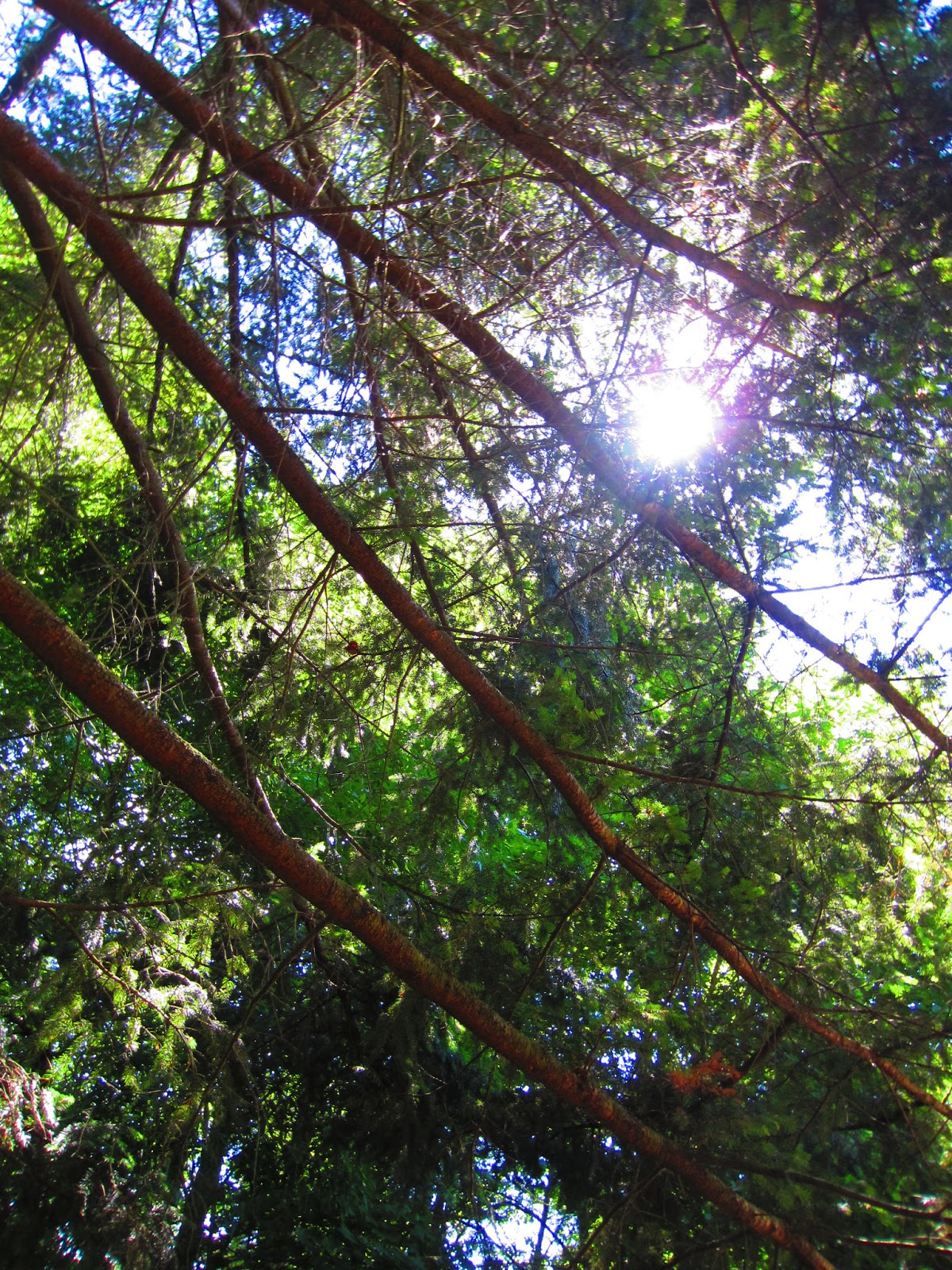
Washington's known for its sprawling forest scenery and wet weather.
          I stayed in a small apartment in a city near Seattle, called Redmond, known for Microsoft which is located near the highway. Waking up was an experience as the sounds of the trickling stream and pond behind my friend's cozy home eased me, and sleeping was orchestrated by toads and owls. The trip was spent here mostly, my friend and I watching horror movies and documentaries, but when we had the chance, we took the bus and headed towards Seattle.
         
A small distance from the apartment, this brook was a calm getaway for reading.
     The main focus within Seattle was to experience the culture and history of Washington. I grew up hearing about a city within the north built on the creativity and hard work of those who braved the constant rain. One major landmark of this would be the Pikes Place Farmers Market, and it was just amazing. For roughly a mile, vendors with a history of thirty plus years shouted, hooted, and welcomed passing tourists and shoppers into their stores of fresh fish, cheap books, and indie artwork.
Pikes Place Farmers Market
          The day went by fast, and eventually, my friend and I grew hungry but were low on money. Thanks to Yelp!, a local place was suggested and we made our way to Seattle's Merchant's Cafe and Saloon. It was said and written to be the oldest cafe and saloon within Seattle, something my friend said I had to experience even if she had never been there, and I ordered the grilled cheese with bacon and fresh fries; however, that was not the only thing that came with the meal: the location is haunted.
          Yelp! comments stated that the ghosts were active on occasion, and immediately, I asked the host if the place truly was haunted. He stated, yes, it was, and things tend to happen on ocurrance. I took a shot and asked if I could investigate, and he instructed for me to head to the basement, where the restrooms are located, and to "do [my] thing." As soon as dinner ended, I was on my way with camera in hand--I wish I had my recorder, however.
          The basement was illuminated more than I had anticipated, holding both a lounge and the restroom, but no one was down there at the time. Within stepping down the steps, the atmosphere felt heavier than upstairs. It wasn't negative, but it was noticeably different. I began to snap photos as my friend sat hirself (excuse the pronoun; she's agender, a division of the transgender community, and looked over the room, taking it in. After several shots, I captured orbs, supposed forms of energy that are manifested by spirits, but I knew that it was a poker game with such things. After spending a while downstairs, I said thank you and left.
          Back home, I've looked back on the trip. Yes, I've gathered several stories that I wish to write, and I was able to pick up many trinkets and wet clothing along the way. It was sad leaving my friend of 7 years behind when I had just met her in person at the start of the week, but I hope to return or drag hir down to southern California another time.
          I've looked through the photos of the Merchant's Saloon, and not much has stood out to me as far as what was captured, but I did find one photo that stood out to me. The world is full of skeptics, and orbs do have a tendency to get confused with dust and water particles, and even insects, but this orb out of all of the photos takes on an illumination of its own, and to compare, I've pasted a photo with dust below, followed by the orb. View it in an analytical perspective as you will--these photos have not been modified in any form, shape, or manner other than uploading into this post.

On the top right against the bricks, this can be argued as dust due to the translucent center and bright ring; also, it is in a dusty area of the basement against bricks.
In contrast, up against the ceiling is an orb that seems to be illuminated on its own brighter than usual; compare to the photo above.

Friday, June 7, 2013

Writing Tutoring and the Future

          As a writing tutor, I get an experience of both being a student and a teacher. It's an odd mix as I have never thought of myself as a teacher, but I've been told by students that's how we--meaning tutors--are seen as. That's not the reason I tutor, however. For me, tutoring is a way to keep myself busy and talking and thinking about writing. Some would argue that's like doing homework every day, but I find it play-time.
          This semester was different for me as I actually had a professor mentor over me while I tutored in her classroom. It was a new form of work I have never been given, and it brought many challenges along the way. But I ultimately learned a lot, such as how to handle the different types of learners further, how much planning goes into a lesson, how flexible a professor/instructor must be with the tasks at hand and how the students digest it, and how many ways writing can be looked at. Not only did this help me as a tutor, but this affected me in my writing.
          The structures and tones I witnessed opened my eyes, and the stories some students told me gave me a further glance into human nature and the conflicts that can occur. One student, an older woman, told me large stories of her day-to-day concerns and accomplishments; then she proceeded to discuss how if something happens on a small scale, it can affect her and the day in its entirety. Story wise, this gave me the opportunity to apply ideas on character direction in impossible, stressful situations.  Even in non-stressful situation, a character could react horribly, putting them into a new conflict (though, the student I speak of never did such a thing, I must add). The position didn't just affect my fiction, but it changed how I viewed my own future and direction.
          Two years ago, I would have never thought of becoming a professor in anything, but I fin myself thinking towards the idea every day. Being payed to help others and push them to a new level with writing, something I'm passionate for, sounds amazing even there are those who are obviously less passionate. Furthermore, my own studies have revealed that I'm heavily interested in focusing on female literature and feminist arguments even more so than I had thought before. I plan to see a counselor next week and announce my major in English, so I'm excited, but as the semester wraps up, My plan is to dive heavily in fiction.
          As a student, it's difficult to find free time that works with class, work, and fiction writing. The same can be argued for anything: being a professor, parent, business-person, police-officer, etc. But these next few months will allow me to tackle my writing skills at the same level I had previously, and I will be able to read as many books as I want to assist. The students laughed when I stated I would be writing all summer, but they didn't realize how much this is a passion for me. That, or maybe my thriller stories are really starting to affect me.

Sunday, May 12, 2013

Mother, Where and How Art Thou

          Growing up, I never saw my mother. That could be seen as a lie as I did see my mother, just rarely. I rarely saw my father too, and that can at times hurt a little; when I'm asked on who my parents are or what they do, I explain but don't go heavily into detail. With Mother's Day, that can be somewhat conflicting.
          It's okay to have certain feelings, of course. That's what makes us human. I was raised on the edge of East Los Angeles by my grandparents until the age of fourteen, right around when my grandfather passed away due to unknown reasons (at least to me, for I've never asked my family how or why he died). But me and my brother were happy regardless of our folks, who spent the week working: our father was a truck driver, and our mother is still currently a supervisor at Southern California's Gas Company. We would visit them on weekends by means of car, picked up by our father, inhaling the smoke of his cigarettes as it would coat the windows in ash. I always told my parents I had reasons why I can't smell.
          But the weekends were always happy memories. Mom would take us to the grocery store, and we would get cookies, fresh baked from the bakery. She would drive us early at dawn to Disneyland, a place that today is still a large part of my life for the memories we created; I'll never forget the week we took off of school to attend Disneyland's 50th Anniversary. I still have the souvenirs from that weekend.
          Sadly, our father was in a serious car accident that crippled him to a permanent limp. I don't remember how old I was, but again, I didn't know the severity at the time--he was delivering food to the local Mcdonald's on Central ave in Chino, when a car spread through parking lot, ran him over the hood and left him on the ground with a broken neck.
          He got back up and went straight to work until he could work no more.

Mom on the Las Vegas strip during a vacation.

          However, Mom pushed through it and still drove us where she could, cooked what we enjoyed, and took care of the house while Dad was recuperating. He never grew stronger, so he sits in the living room on a large leather chair. He watches television and reads, doing what he can to help.
           When I was in second grade, I had a freak accident and broke my right femur, supposedly the strongest bone in my body (of course, I took it to the challenge to prove science wrong). Immediately I was taken to the hospital by my grandmother, who phoned my mother. I was medicated and fell asleep under the pain, waking up occasionally to scream; the memory of crying at night with the cold, rigid metal brace against my back and mangled thigh is something I'll never forget. When I awoke, Mom was there, and for the next three months, working to get healthy so I could be home for Christmas, I found her staying at the side of my bed through the tears and joy. It wasn't until a week ago that I learned she was told by the doctor at the time I might have had bone cancer due to the broken femur. She told me, as I prepared for work, that she cried hard that day.
          And now when I'm soon to reach 21, a serious achievement for me after a couple of years of stress and fear, she is still there for me--for us--taking care of the family the best she can. Dad's unable to work due to his handicap, but he gets a check in from time to time, and Mom works every day of the week, late or early, and she even works weekends--the woman has 8 weeks worth of vacation saved for crying out loud.
         Growing older as an young author, I look back to see what parts of my history could make a story that affects people inside. The idea of changing someones life and proving to them they're not alone is something I strive for, and it's difficult. It really is. When ideas are dry, and the game system calls me, however, I think on my family, and especially my mother. She's showed me out of everyone that it's possible to have the strength to do anything, and I thank her for that.
          Now, if only I had the strength to clean my room.